

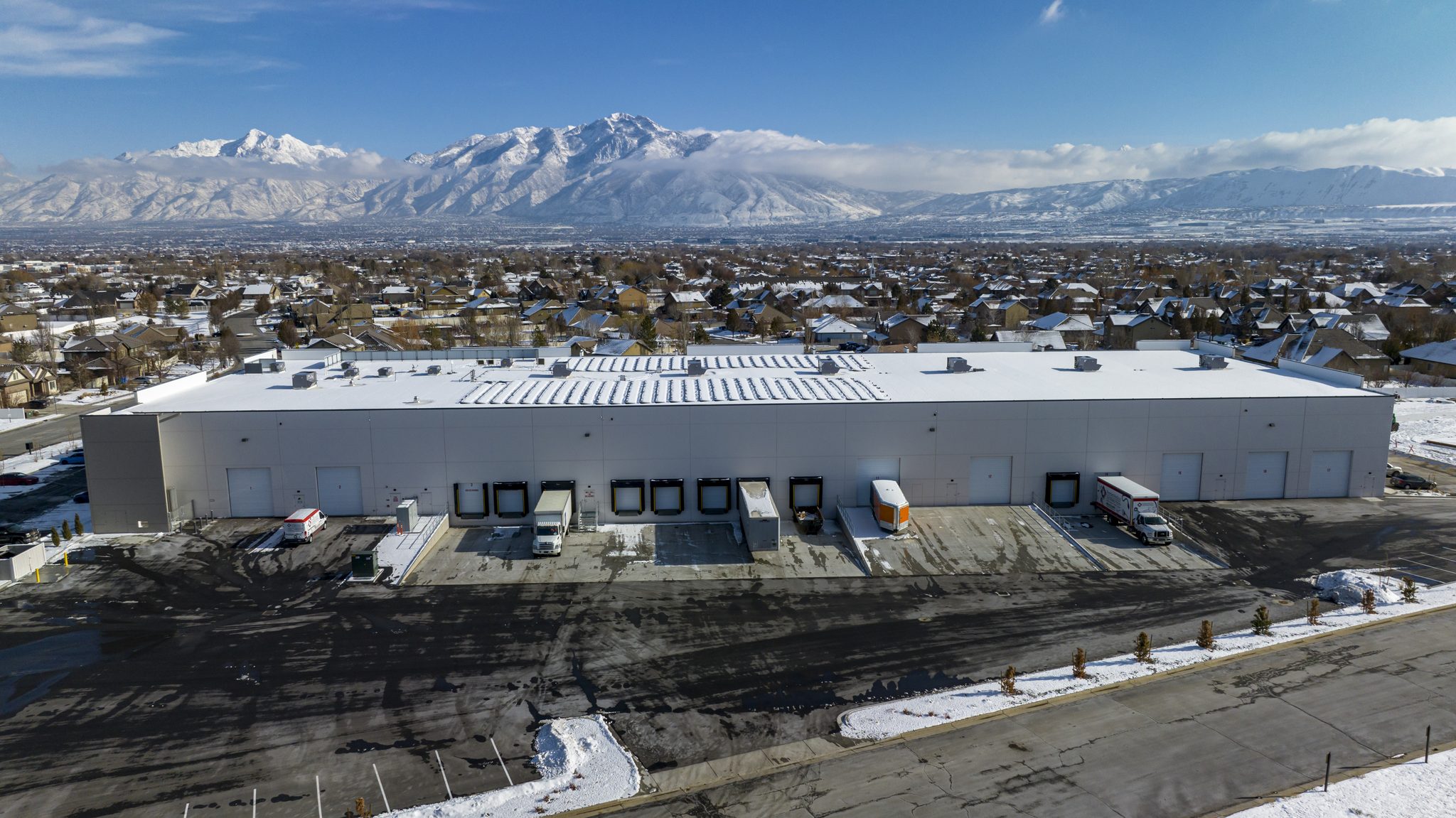
Winter drone photography in Utah can produce some of the cleanest aerial images of the year. Fresh snow, white mountain backdrops and crisp air after a storm make properties and landscapes stand out from above.
Winter also brings cold batteries, short days, inversions and icy launch sites. This guide explains what changes when the temperature drops and how professional pilots plan safe, sharp winter shoots across the state.
Why winter drone photography works so well in Utah
Snow simplifies a scene. It covers bare dirt, hides clutter and makes buildings, roads, parking lots and property lines easy to read from above.
The Wasatch Front and the ranges around it are at their most dramatic when they are white. On a clear day after a storm, a single aerial frame can show a property with snowy peaks behind it, which is a view people remember.
Winter shoots are useful for many kinds of clients:
- Commercial property owners who want leasing or sale photos with a mountain backdrop
- Builders who need to document a project through every season
- Cabins, lodges and resorts that sell the winter experience
- Facility managers who want to see snow buildup and drifting on flat roofs
- Businesses that want fresh seasonal footage for social media and ads
If you want to see what a seasonal shoot can include, our aerial photography and videography services page covers photo and video options for every time of year.
Cold batteries are the biggest winter risk
Drone batteries are lithium polymer packs, and they lose usable capacity when they are cold. A pack that shows full in a warm vehicle can drain much faster in the air on a freezing morning.
Cold packs can also sag in voltage when the motors pull hard, such as during a climb or in wind. That can trigger a low battery return sooner than expected. In a bad case, the drone can lose power before it gets home.
How professional pilots manage batteries in winter
- Keep batteries warm in the vehicle or an insulated bag until right before takeoff.
- Check the manufacturer’s rated operating temperature and do not launch outside it.
- Hover low for a short time after takeoff so the pack warms and the voltage settles.
- Plan shorter flights and land with a larger reserve than in summer.
- Watch battery temperature and voltage in the flight app, not only the percentage.
The drone’s own manual is the authority on its temperature limits. Different models and batteries handle cold differently, and some packs have built in heaters while others do not.
Snow, glare and getting the exposure right
Bright snow fools camera meters. Left on automatic, a camera often underexposes a snowy scene and turns white snow a dull gray. On sunny slopes it can do the opposite and blow out the highlights.
Experienced pilots shoot RAW files, check the histogram on every setup and bracket exposures on high contrast scenes. Editing then brings back clean whites with visible texture, plus detail in the darker roofs, trees and pavement.

Low winter sun has an upside. It rakes across the ground and adds long shadows and texture even at midday, which helps buildings and terrain look three dimensional.
Tips for clean snow images
- Fly soon after a storm, while the snow is fresh and trees still hold it.
- Avoid flat, overcast light when the goal is texture and depth.
- Keep the sun to the side of the subject instead of directly behind the camera.
- Let the camera adjust before flying when moving from a warm vehicle into cold air, so the lens does not fog.
Utah inversions, fog and FAA visibility rules
Inversions are a normal part of winter along the Wasatch Front. According to the Utah Department of Environmental Quality, a typical Utah winter sees about five to six multi-day inversion episodes, when cold air near the ground is trapped under a layer of warmer air.
For aerial photos, an inversion means haze, low clouds and flat gray light in the valleys. A building can look fine from the parking lot and still disappear into murk from a few hundred feet up.
Visibility is also a legal limit, not just a creative one. Under 14 CFR 107.51, a Part 107 pilot needs at least 3 statute miles of flight visibility from the control station. The drone must also stay at least 500 feet below clouds and 2,000 feet horizontally from them.
Low winter clouds and freezing fog can ground a shoot, and a professional pilot will reschedule rather than push it. The Utah DEQ notes that a strong storm or low pressure system is often needed to clear an inversion, which is why the clear day after a front passes is often the best time to fly.
Short days and civil twilight rules
Winter days are short, and many shoots end close to sunset. Flying at dusk is allowed, but it comes with specific rules.
Under 14 CFR 107.29, evening civil twilight is the 30 minutes after official sunset, and morning civil twilight is the 30 minutes before official sunrise. During those windows the drone must have lighted anti-collision lighting visible for at least 3 statute miles. After civil twilight ends, the flight counts as a night operation, which also requires the pilot to have completed the current knowledge test or training.
Good planning keeps the shoot inside the best light. Pilots arrive early, set up while the sun is still up and schedule the main flight in the early afternoon, with a short dusk segment only when the project calls for it.
Winter conditions and how pilots plan for them
| Condition | What it affects | How pilots plan for it |
|---|---|---|
| Cold temperatures | Battery capacity and flight time | Warm packs, shorter flights, bigger reserve |
| Fresh snow | Exposure and contrast | RAW files, bracketing, careful editing |
| Inversion or fog | Visibility and haze | Check forecasts, reschedule, fly after a storm |
| Short days | Shooting window and twilight rules | Afternoon scheduling, anti-collision lighting |
| Wind on benches and ridges | Stability and battery drain | Check winds, keep a larger margin |
Staying safe on the ground and in the air
Winter safety starts before the props spin. A few habits prevent most cold weather problems:
- Launch from a cleared spot or a landing pad so snow does not get into the motors or gimbal.
- Watch for ice on the propellers in freezing fog or wet snow, and land right away if the drone behaves differently.
- Do not fly in falling snow or rain unless the aircraft is rated for it.
- Keep phones and tablets warm, since cold screens and batteries can shut down mid flight.
- Expect stronger wind at altitude near canyon mouths and on the benches.
- Keep clear of skiers, sledders and crowds, and get the landowner’s permission at private resorts and lodges.
Pilots also dress for standing still. Running a camera and watching a screen for an hour in the cold is harder than it sounds, and a cold pilot makes slower decisions.
Winter drone photography for businesses, builders and facilities
Winter is not a dead season for aerial work. Several kinds of projects benefit from flying while the snow is on the ground.
Listings and property marketing
A property with snowy peaks behind it sells the Utah lifestyle, especially for mountain homes, cabins and commercial sites with a view. Our real estate drone services work year round, and agents often pair a winter set with warmer season photos so buyers see the property in every season.
Construction progress
Most Utah projects keep moving through the winter, and owners and lenders still want regular updates. Consistent flights from the same angles build a visual record of the work, whatever the weather on the ground.
Roofs and facilities
A winter flight shows where snow drifts collect on flat roofs, around rooftop units and over solar arrays. It also shows foot traffic paths and areas that stay covered after the rest of the roof clears. Our construction and inspection drone services cover both progress documentation and roof overviews.

Frequently asked questions
Can you fly a drone while it is snowing?
Most camera drones are not rated for falling snow or rain, and moisture can damage the motors and electronics. Professional pilots plan winter drone photography for the hours before or after a storm, not during it.
How cold is too cold to fly a drone?
It depends on the aircraft. Each drone and battery has a rated operating temperature in its manual, and a responsible pilot does not fly outside that range.
What happens if the weather is bad on shoot day?
We watch the forecast in the days before a shoot. If low clouds, fog, wind or snow would make the flight unsafe or the images poor, we reschedule for the next good window.
Are winter photos good enough for a listing?
Yes, when the light is clear and the snow is fresh. Many sellers like winter photos for mountain and view properties, and they can add warm season images later.
Plan your winter drone shoot with Utah Drone
Our FAA Part 107 certified pilots fly all winter and plan every shoot around batteries, light, visibility and safety, so you get sharp snow images without the guesswork. We serve the whole state, and you can check our Utah service areas to see where we fly.
Contact us today for a free quote. Call (385) 417-4017, email contact@utahdronevideo.com or request your free quote online.